/
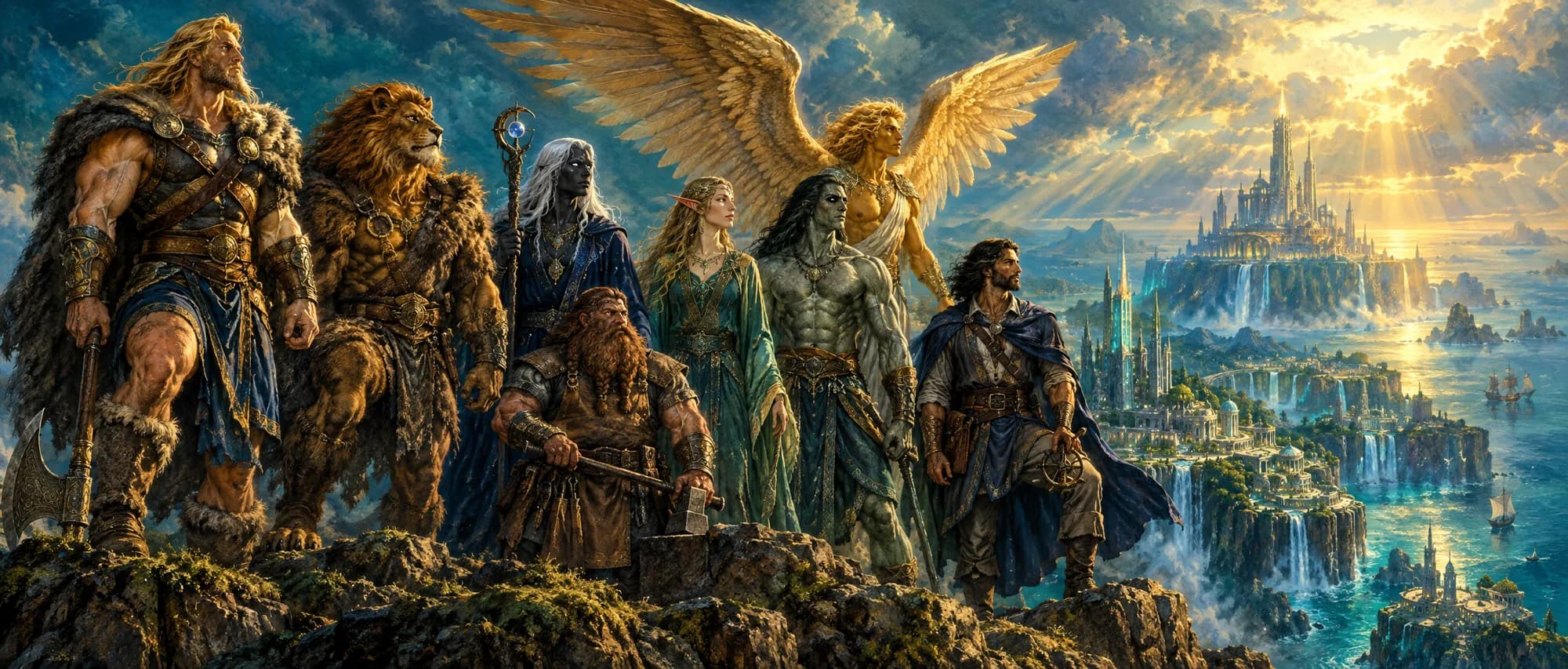
8 races
- AesirA giant hill-and-mountain folk descended from (but smaller and brighter than) the Jotun frost giants. They feel everything strongly, love battle and the sea, hate trolls and ogres, and call Dwarves their 'little brothers'. Their size is also a drawback: most standard armor, gear and some weapons don't fit them, and only the biggest warhorses can carry one.
- Andaman'Beast-men' believed to have been created by First Age Atlantean sorcerers: fur-covered humanoids with the head of an animal, in sub-types such as lion-, jackal- (gnolls), wolf-, leopard- (Agioto), tiger- and panther-men. They live in small prides on plains and savannahs, are grim and fiercely loyal, and some hate Atlanteans. Unreliable births mean the race is slowly dying out.
- DruasThe most mysterious of the races: black-skinned, white-haired, gray-eyed people with the grace of elves or faery folk and no homeland of their own. Scholars disagree whether they come from forest folk, elves crossed with fiends, or Mu's legendary first humans. A dwarven folk tale says their home, Talislantis, sank in the first cataclysm and that they will wander 'until Talislanta again rises'. They seem dreamy and preoccupied, and all have innate psychic gifts.
- DwarvesThe most civilized of the underground peoples and among the oldest, living mostly in mountains; wars with trolls and goblins have cut their numbers. Short, stocky and bearded (women too), they are dour, hard-working miners and smiths who love gems and metals. They distrust Nethermen, who are related to goblins, and are especially fond of the Aesir.
- ElvesThe eldest humanoid race and the most civilized of the sidhe (faery folk), in slow decline as humans spread. Wood, mountain and aquatic elves live in scattered colonies, and a seafaring high-elf people are builders and navigators. They live for 800-900+ years, rarely act rashly, never forget a kindness or forgive an injury, dislike the goblin-related Nethermen, and are naturally drawn to magic.
- HumansThe most numerous humanoid people, spread from coastal cities to remote inland tribes, with no single typical appearance. Their success is put down to adaptability and a fast birth rate. They get on with most races but tend to dislike Nethermen and some fear the Druas; the book notes prejudice is mostly a human failing.
- NethermenNot a true species but human-goblin crossbreeds, most descended from hybrids bred by First Age Atlantean sorcerers. They look human but more muscular, with goblin skin tones and black eyes with white pupils. Most are sterile, so the race is shrinking. Nomadic warrior clans, often violent and cunning, they are tolerated in human lands; few have any talent for magic.
- ZephyrA rare winged people from Mu and parts of Lemuria; only a few hundred are thought to survive. Hollow-boned and light, with gold-to-copper skin, hawk-sharp eyes and wings over 20 ft across that fold nearly flat under a cloak. They are high-strung, admired for beauty and song, hate reptiles and the serpent-folk Naga, and make fine archers and javelin/sling fighters. They cannot wear armor; their priests serve the god Vania the Dove.